The Delineator Analytic
Nuances, Pure & Middle Signals
The Delineator is subject to 2 types of trading signals; Pure Signals and Middle Signals.
Pure Signals:
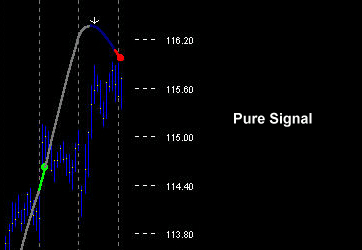
Figure 5-1
Pure Signals are those in which the primary indicator has been confirmed by the secondary indicator on the day the signal was first initiated with a slope change. In the example above, you can see that the line after the negative slope change is blue. This indicates the secondary indicator is confirming the signal (it would be grey if unconfirmed). Then the Delineator generates an Early Enter Short signal (indicated by where the line turns red) and finally a confirmation/enter trade signal on the opening bar of the next trading day (indicated by where the red dot is generated). This is the definition of a Pure Delineator Signal (a short signal in this case). The Most recent signal descriptor will alert you to these two signals by ringing and telling you what the signal is.
Middle Signals:
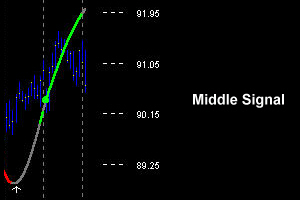
Figure 5-2
Middle signals occur when a signal is generated by the primary indicator but not confirmed by the secondary (indicated by the line being grey). Instead, secondary confirmation comes 1 or more days after the initial signal is generated. In the example above note that the system changed slope but did not change color from grey to green until the following day, when the secondary indicator confirmed the signal. Middle Day signals may still be profitable but may carry a higher degree of risk than Pure signals. We will alert you to these "middle" signals when they occur. Unless otherwise indicated, assume all signals are pure signals.